Building Permit Drawings in Burlington: Zoning Checks, Permit Documents, and City Review
General Permit Knowledge
Learn the permit and building code requirements for legal basement apartments in Ontario, including fire separation, ceiling height, egress, inspections, and permit drawings.

Converting a basement into a legal apartment can be a strong way to add rental income and improve the long-term value of a property. But before renting the space, the unit needs to meet applicable building code, fire safety, zoning, and municipal requirements.
A basement apartment may also be called a legal basement apartment, secondary suite, or accessory dwelling unit. Whatever name is used, the goal is the same: the space must be reviewed, permitted, inspected, and safe for occupancy.
This guide explains the main permit requirements homeowners should understand before legalizing or building a basement apartment in Ontario.
A basement apartment permit allows the municipality to review the proposed unit before construction or legalization work proceeds. The permit process helps confirm that the design follows applicable zoning rules, building code requirements, and safety standards.
The permit process is not only paperwork. It gives the city a chance to review the proposed layout, entrances, fire separation, ceiling heights, room sizes, windows, ventilation, plumbing, and other important details before the unit is occupied.
Depending on the property and project scope, the review may include:
Permit drawings are a key part of the application. They show the existing layout, proposed basement apartment layout, construction details, fire separations, room sizes, exits, windows, and other code-related information the building department needs to review.
The exact requirements for a legal basement apartment depend on the age of the house, the existing conditions, the municipality, and the proposed layout. A professional review is important because small details can affect whether the unit can be approved as designed.
For houses that are newer or recently constructed, requirements may include stronger fire separation and ceiling height standards. Common items reviewed can include:
Older homes may be reviewed under different provisions depending on the municipality and code path being used. Items such as fire separation, ceiling height, window area, egress, alarms, and room sizes still need to be assessed carefully.
Because the difference between an older and newer home can affect the design approach, it is important not to rely on a generic checklist alone. The existing conditions should be measured and reviewed before preparing the permit package.
New or modified electrical work may also need review by the Electrical Safety Authority. Plumbing, HVAC, fire safety, and building inspections may also be required as the work proceeds.
Many homeowners want to know whether a separate entrance is required and whether an already finished basement can still be legalized. In many cases, the answer depends on how the existing space is laid out and whether it can be brought into compliance.
A legal basement apartment typically needs an acceptable entrance and exit arrangement that does not require occupants to pass through another dwelling unit. Possible entrance arrangements may include:
Basement apartment design also needs to consider emergency egress. This may include approved exits, egress windows, or other code-compliant arrangements depending on the layout and municipality.
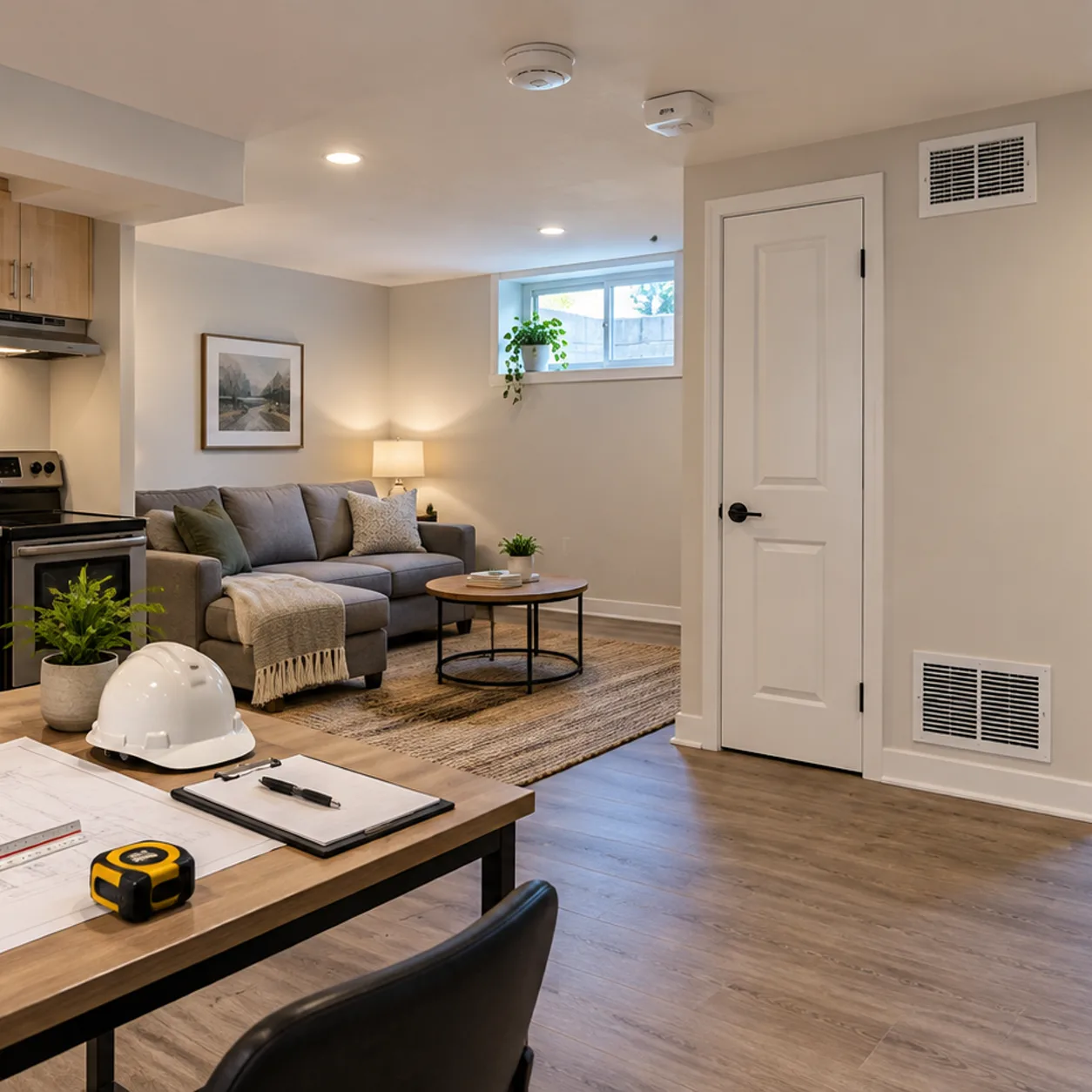
An already finished basement can sometimes be legalized, but it often requires extra review and corrective work. The existing ceiling height, fire separation, windows, ventilation, electrical work, plumbing, alarms, and layout all need to be checked against the applicable requirements.
If work is concealed behind finished walls or ceilings, the inspector may require access to confirm what was built. In some cases, corrections may involve opening areas, upgrading fire protection, adding windows, changing room layouts, or updating building systems.
Legalizing a basement apartment takes planning, but it can protect the homeowner, improve safety, and make the rental unit more attractive to future tenants or buyers.
A legal basement apartment can provide several practical benefits:
Renting an unpermitted basement apartment can expose a property owner to fines, enforcement action, insurance concerns, tenant safety risks, and costly retrofit work later. If the city requires corrections after a tenant has moved in, the process can become more disruptive and expensive.
A building permit consultant, designer or architect, architectural technologist, engineer, or qualified contractor can help review the existing conditions, prepare permit drawings, coordinate required documents, and respond to municipal review comments.
Permit Works helps homeowners prepare building permit drawings and organize permit applications for basement apartment projects. If you are planning to legalize a basement apartment, early review can help identify code issues before construction costs increase.
In most cases, yes. A legal basement apartment usually requires a building permit, permit drawings, municipal review, and inspections to confirm the unit meets applicable code and safety requirements.
Sometimes. The existing basement needs to be reviewed for ceiling height, fire separation, exits, windows, ventilation, electrical work, plumbing, alarms, and room sizes. Corrections may be required before approval.
A legal basement apartment typically needs an acceptable entrance and exit arrangement that does not require occupants to pass through another dwelling unit. The exact solution depends on the property layout and municipal/code requirements.
It is not recommended. Renting an unpermitted basement apartment can create enforcement, safety, insurance, and financial risks. It is safer to complete the permit and inspection process before renting the unit.
Cross-check project-specific requirements against Ontario's second-unit guide and current Building Code information. Electrical work is separate from the building permit process; the Electrical Safety Authority explains notifications and inspections.
Planning or legalizing a basement apartment? Review our Basement Apartment Permit service, see options for a basement walkout or separate entrance, or read how to check whether an existing basement apartment is legal.
Not sure if your project needs a permit? We can help.
Book a free 15-minute consultation and we'll guide you through it
.png)